Brain Cancer Treatment
Picture someone who has a seizure at work and wakes up to an MRI showing a mass. The next question is always the same: what happens now? Brain cancer treatment usually combines surgery, radiation therapy, and sometimes chemotherapy or targeted drugs. The mix depends on the tumor type, where it sits, and whether it started in the brain or spread there. This page covers the main options, how they're chosen, and what to expect. Dr. Karan's view is simple: a plan should come from your own scans, not a template.
Reviewed by Dr. P. Vijay Karan Reddy · Radiation Oncologist ·
Last updated October 2026
Brain cancer treatment usually involves surgery, radiation therapy, and sometimes chemotherapy or targeted drugs. Surgery removes or samples the tumor when it's safe to reach. Radiation therapy, including stereotactic radiosurgery, targets tumor cells while sparing healthy brain tissue. The plan depends on tumor type, size, location, and whether the cancer began in the brain or spread there.
Dr. Karan Explains Your Treatment Options
In this short video, Dr. Karan walks through how a treatment plan is built, what each option involves, and what to expect from your first consultation.
How Brain Cancer Is Treated
Most plans start with surgery when the tumor can be reached safely. Radiation or chemotherapy often follows, and some slow-growing tumors are simply watched with scans first. According to Cancer Research UK, the main treatments for brain tumors are surgery and radiotherapy, with chemotherapy used for some people.
Dr. Karan delivers the radiation. IMRT and IGRT cover almost every brain tumor in adults and children. Proton therapy is used mainly for children, and radiosurgery for small benign tumors. Surgery and chemotherapy are led by partner specialists at Apollo Hospital, so you'll always know who's doing what. Here's the honest part: the best brain cancer treatment in India isn't one machine or one hospital. It's the plan that fits your tumor's type, grade, and location, delivered in the right order.
Brain Cancer Treatment Options
These are the options used for brain tumors. Your plan may use one or several.
Surgery (craniotomy)
Removes as much of the tumor as is safe and confirms the diagnosis with tissue. Often the first step when the tumor is reachable.
With partner neurosurgeonsStereotactic radiosurgery (SRS)
One to five precisely targeted, high-dose sessions aimed at a clearly defined tumor. Best suited to small benign tumors and to cancer that has spread to the brain in up to five places.
Learn about SRS →IMRT and IGRT
IMRT shapes the dose to the tumor's outline, so nearby structures like the optic nerves get less of it. IGRT checks your position with imaging before each session. Together they're the foundation for brain tumors in adults and children.
Learn about IMRT →Whole-brain radiotherapy
Treats the whole brain when cancer has spread there in more than five places, where radiosurgery alone isn't practical.
Delivered by Dr. KaranProton beam therapy
Delivers radiation with very little dose beyond the tumor, which is why it's used mainly for children, whose growing brains are most sensitive. It can suit adults too, if cost isn't a barrier.
Learn about proton therapy →Chemotherapy
Drugs that travel through the bloodstream to reach cancer cells. Given together with radiation only for grade 3 and grade 4 gliomas.
With partner oncologistsTargeted therapy and tumor treating fields
Targeted drugs suit some tumors with specific genetic changes, found through molecular testing. Tumor treating fields are an option for some glioblastomas.
Discussed case by caseNot sure which treatment fits your tumor? Let's review your scans together.
How Brain Cancer Treatment Changes by Tumor Type
The usual approach depends on the kind of tumor and where it came from.
Glioblastoma (grade 4)
The most aggressive primary brain tumor. Standard care is surgery where possible, then radiation with temozolomide chemotherapy. Brain tumors are graded, not staged, so stage 4 brain cancer treatment usually means this, or cancer that has spread to the brain.
Low-grade glioma
Grows more slowly, so the first option is always observation with regular follow-up MRI. Age and location tip the balance. In younger patients, treatment is usually delayed. In older patients, or when the tumor sits close to critical structures or causes symptoms, we step in earlier. When treatment starts, surgery usually comes first, with radiation or chemotherapy added depending on the tumor's genetics and growth.
Meningioma
Usually benign, growing from the membranes that cover the brain. Many are simply watched with scans. Those that grow or cause symptoms are treated with surgery, radiosurgery, or both.
Pituitary tumors
Most are benign and form in the pituitary gland at the base of the brain. Treatment depends on hormone effects and pressure on vision, and may include surgery, radiosurgery, or medicines.
Treatment for secondary brain cancer
Cancer that began elsewhere, often the lung, breast, skin, or kidney, then spread to the brain. The approach depends on how many lesions there are. A single lesion is treated with surgery followed by radiosurgery, or with radiosurgery alone. Up to five lesions are treated with radiosurgery. More than five call for whole-brain radiotherapy.
Why Patients Choose Dr. Karan for Brain Cancer
Radiation-focused expertise
Dr. Karan is a radiation oncologist who plans and delivers brain radiation himself.
Experience with brain cases
Radiation planning for 100 brain tumor patients to date, backed by 11 years in radiation oncology.
Coordinated planning
Every case goes to a weekly tumor board. The plan is confirmed the same day and shared with you before treatment starts. It's evidence based, not tilted toward any one specialty, and it weighs your physical, mental, and social situation.
Honest counsel
A clear view of which options will help and which may not, before you commit to anything.
Dr. Karan's role is radiation. Surgery and chemotherapy are led by the surgical and medical oncology team at Apollo Hospital, Financial District.
What to Expect, Step by Step
- 01
Consultation and report review
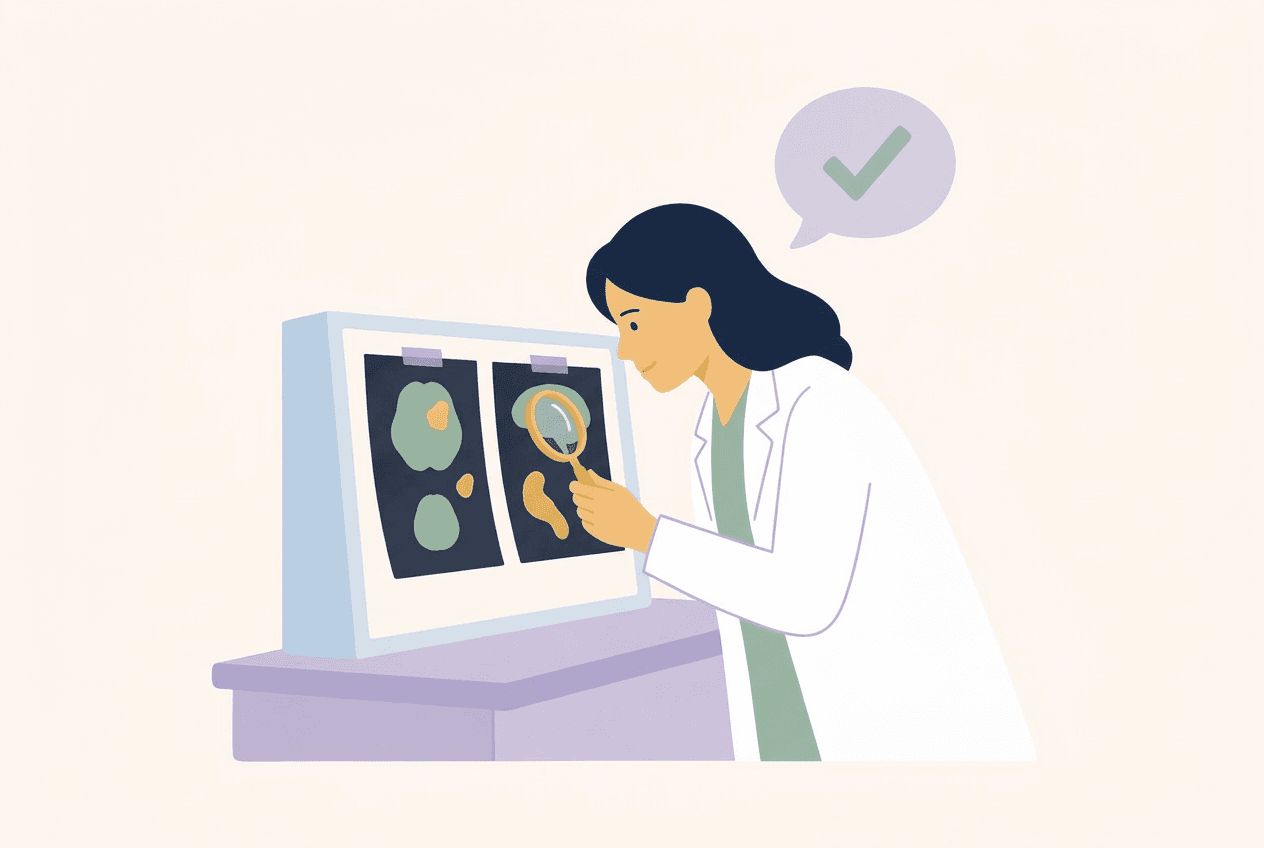
Dr. Karan reviews your MRI, pathology, and reports, then explains the options in plain terms.
- 02
Tumor board review
Your case is discussed at the weekly tumor board with neurosurgeons, oncologists, and radiologists. The plan is confirmed that same day and shared with you before treatment starts, and it balances the best results against the fewest side effects.
- 03
Simulation and planning
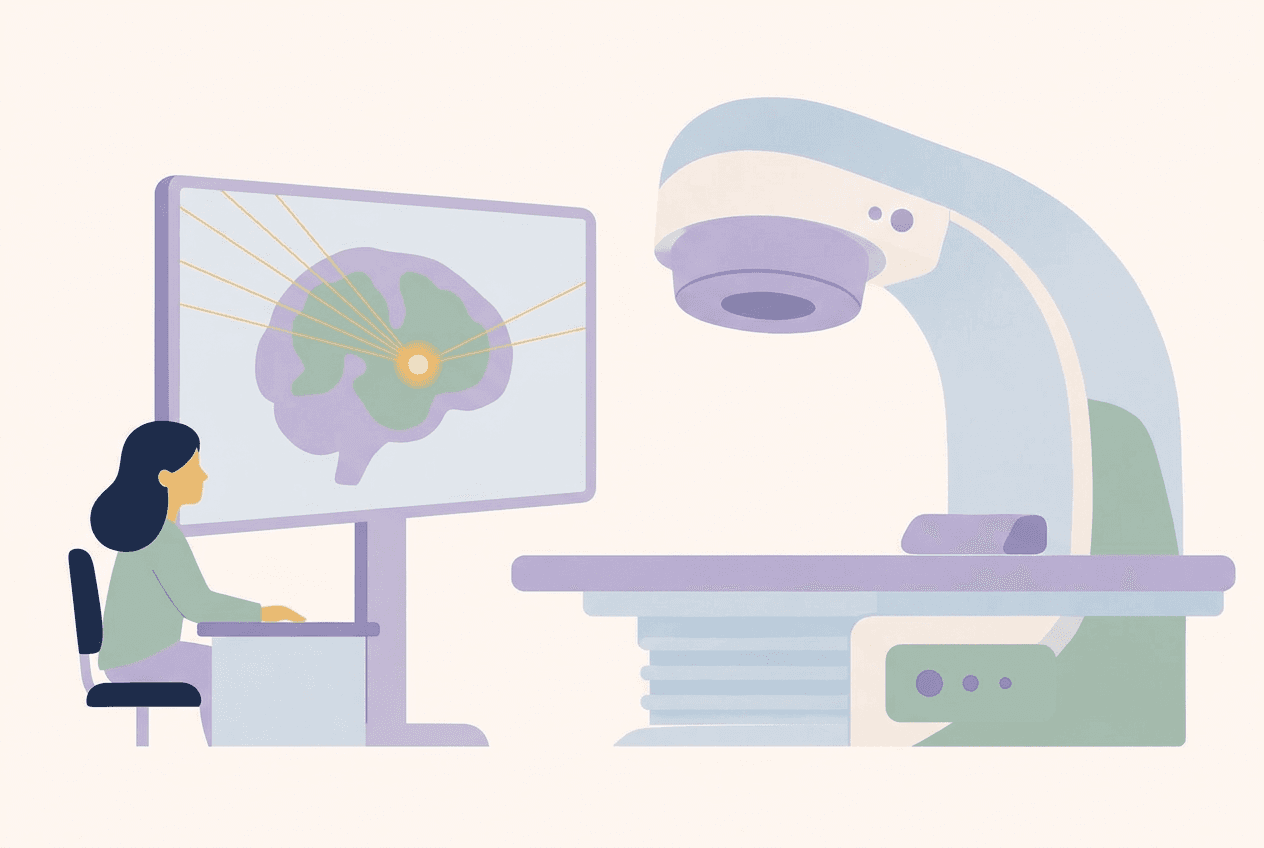
You're fitted for a soft mesh head mask and scanned, so every session lines up exactly. The first session usually follows about two days later.
- 04
Treatment sessions
Radiation is given in short daily sessions over a few weeks, or in one to five sessions for radiosurgery. Many people keep up light routines between visits.
- 05
Follow-up
Scheduled MRI scans track how the tumor responds and catch any changes early.
Side Effects and How They're Managed
Will treatment change how you think or feel? Usually only for a while, and most effects can be eased.
Worried about side effects? Dr. Karan will walk you through each one and how it's managed.
Rehabilitation and Supportive Care
Treating the tumor is one part of recovery. The support around it matters just as much.
Brain Cancer Treatment Cost in India
There's no single price, because every plan is different. These are the things that shape it.
Tumor type and stage
The tumor type, grade, and whether this is a first treatment or a recurrence decide which options you need.
Choice of technique
SRS, IMRT, proton therapy, and whole-brain radiotherapy differ in equipment and number of sessions. Radiation typically costs ₹2.5 to 4.5 lakh. Surgery through partners starts at about ₹4 lakh, and chemotherapy runs roughly ₹30,000 to ₹40,000.
Sessions and supportive care
Multi-session plans, imaging, medicines, and rehabilitation add to the total, so ask for an itemized estimate in writing.
Many policies cover radiation and surgery when they're medically necessary, but coverage varies by plan and by treatment. Ask your insurer for pre-authorization before treatment starts.
Real Patients, Real Stories
Coming from abroad? Dr. Karan can help you plan brain cancer treatment in India.
Questions to Ask Your Oncologist
Bring these to your first appointment, with Dr. Karan or anywhere else.
- Is my tumor primary, or did it spread from somewhere else?
- What tumor type and grade do my reports show?
- Would radiosurgery or whole-brain radiotherapy suit my case?
- Who will lead my surgery, if it's recommended?
- Which side effects should I plan for, and how are they managed?
- What follow-up scans will we need, and how often?
Questions Patients Ask Us
Surgery, radiation therapy, chemotherapy, and targeted treatments are the main options. The right combination depends on tumor type, location, and your general health.
Most plans start with surgery when the tumor is safely reachable, then add radiation or chemotherapy. Some slow-growing tumors are monitored first.
It's a precise, high-dose technique that targets a defined tumor in one to five sessions. It spares surrounding brain tissue and is often used for small tumors or metastases.
Treatment targets the brain lesions and the original cancer. Up to five lesions are treated with radiosurgery, a single lesion may also get surgery first, and more than five need whole-brain radiotherapy.
No. Surgery is used when the tumor can be safely reached, but some tumors are monitored or treated with radiation instead.
Not always. Tumors near critical areas may be only partly removed, with radiation or other treatment controlling what's left.
Brain tumors are graded rather than staged, so this usually means a grade 4 glioblastoma or cancer that has spread to the brain. Treatment typically combines surgery where possible, radiation, and drug therapy.
Fatigue, hair loss in the treated area, and headaches are common during treatment. Memory or concentration changes can appear later and are managed with rehabilitation.
For most brain tumors, immunotherapy is still being studied rather than used as standard care. Your oncologist can tell you whether a clinical trial could suit your case.
Related Pages


Get a Clear Plan for Your Brain Cancer Treatment
Send your MRI, pathology, and reports, and Dr. Karan will explain the options, the sequence, and what each one involves. A second opinion on an existing plan is welcome too. You'll leave with clear next steps, not a sales pitch.

Written & reviewed by Dr. P. Vijay Karan Reddy ·
Radiation Oncologist · Last reviewed October 2026