Warning Signs of Cancer
Most people picture cancer as sudden and dramatic. In reality, the warning signs of cancer in your body tend to be quiet and easy to explain away: a cough that lingers, a lump you first blame on gym soreness, fatigue you chalk up to a bad month. Knowing what's worth a doctor's visit, and what almost certainly isn't, is the whole point of this page.
Reviewed by Dr. P. Vijay Karan Reddy · Radiation Oncologist ·
Last updated October 2026
The seven classic warning signs of cancer are unusual bleeding, a sore that won't heal, a new lump or thickening, a persistent cough or hoarseness, a change in bowel or bladder habits, difficulty swallowing, and an obvious change in a mole or wart. None of these confirm cancer on its own, but any sign lasting more than two to three weeks deserves a doctor's evaluation.
The 7 Warning Signs of Cancer
Seven signs, drawn from decades of oncology screening guidance, call for caution rather than panic. Honestly, none of them are rare on their own, a persistent cough is usually just a cough. What matters is how long a sign sticks around and whether it's new for you.
Unusual bleeding or discharge, such as blood in urine or stool, or spotting between periods.
A sore or ulcer, anywhere on the skin or in the mouth, that hasn't healed within three to four weeks.
A new lump or area of thickening you can feel under the skin, including in the breast, whether or not it hurts.
A cough or hoarseness that sticks around for more than three weeks, especially if you don't smoke.
A change in bowel or bladder habits, like persistent constipation, diarrhea, or needing to urinate more often.
Difficulty swallowing, or food feeling like it's catching partway down.
A mole or wart that changes shape, color, or size, or that starts to bleed.
This list follows the seven-warning-signs framework used by the World Health Organization's cancer awareness guidance, and lines up with the broader symptom lists published by Cleveland Clinic and Mayo Clinic.
Symptoms by Cancer Type
General warning signs matter, but each cancer type has its own pattern worth knowing. Start with the condition closest to your concern.

Brain Tumor Symptoms
Morning headaches, vision changes, and seizures can point to a brain tumor, not just stress.
- Morning headaches that wake you from sleep or feel worse when lying flat
- A new seizure in someone with no prior history of epilepsy
- Sudden weakness or numbness on one side of the face, arm, or leg
- Blurred, double, or partially lost vision that develops over days to weeks
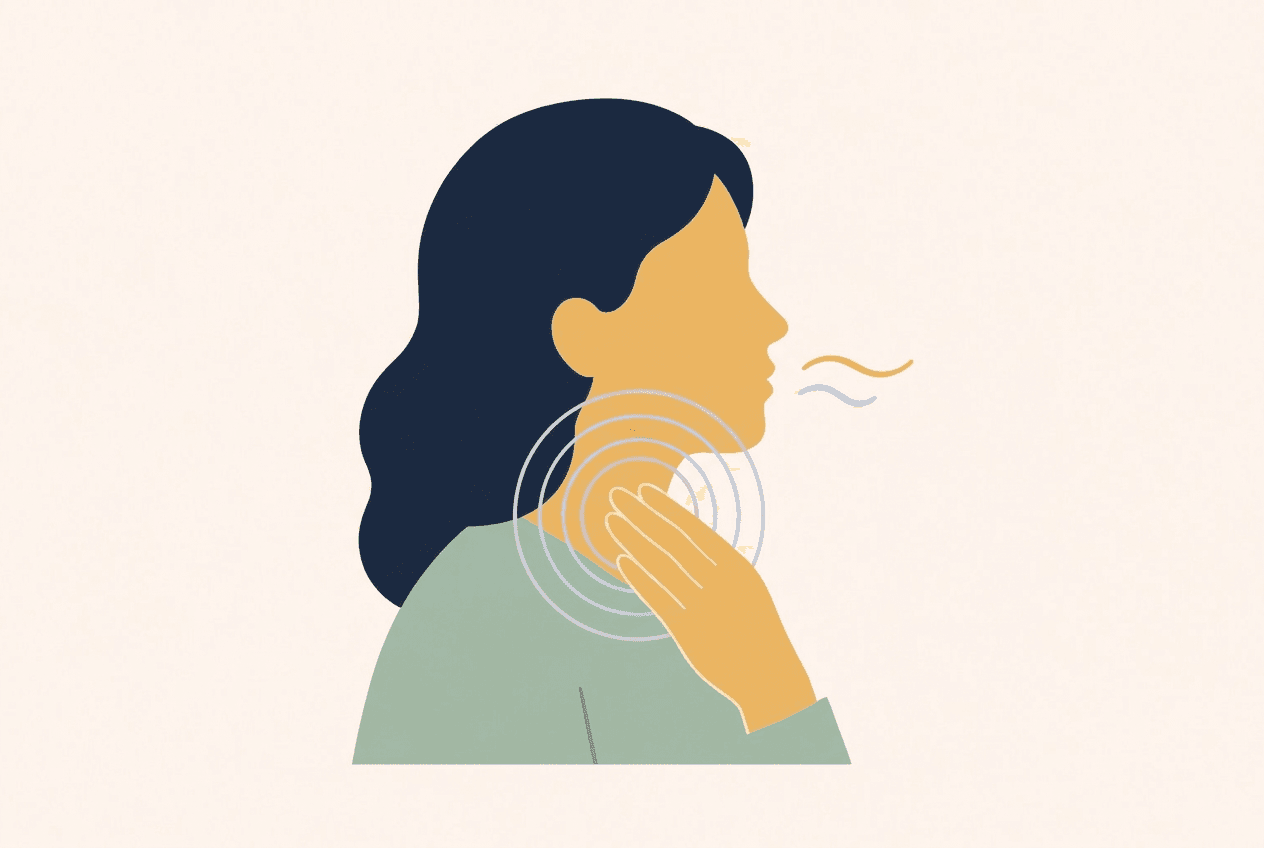
Signs and Symptoms of Head and Neck Cancer
A hoarse voice or a mouth sore that won't heal after three weeks is the pattern to watch.
- A sore throat that doesn't improve after three weeks, with or without a cold
- Persistent ear pain on one side, without any sign of an ear infection
- A hoarse or raspy voice that lasts longer than three weeks
- Pain or difficulty swallowing that keeps returning at meals

Signs and Symptoms of Cancer in Children
Unexplained bruising, fatigue, or bone pain in a child can look like growing pains at first.
- Unexplained bruising, or tiny red or purple spots on the skin that appear without any known injury
- A lump or swelling anywhere on the body, especially the neck, abdomen, or armpit, that doesn't shrink after two to three weeks
- Bone or joint pain severe enough to wake a child at night, or a new limp with no clear cause
- A fever above 101°F that lasts more than a week without an obvious infection behind it
Breast Cancer Symptoms
A new lump, skin dimpling, or nipple discharge deserves a same-week exam.
- A lump or thickened area that feels different from the surrounding breast tissue, especially one that doesn't move when pressed
- Persistent pain in one specific spot in the breast or underarm that isn't tied to your menstrual cycle
- Swelling in the breast, underarm, or around the collarbone, even without a lump you can actually feel
- New tenderness or sensitivity in the nipple that doesn't ease off after a cycle
Cervical Cancer Symptoms
Bleeding after intercourse or between periods is the earliest sign most women notice.
- Vaginal bleeding between periods that doesn't match your usual cycle
- Bleeding after sex, even a small amount, more than once
- Any vaginal bleeding after menopause, regardless of how light it is
- Discharge that's watery, blood-tinged, or has a noticeably foul smell
Why These Symptoms Happen, and Who's More Likely to Notice Them
Why do some people get cancer while others with the same habits don't? Age answers most of that question. Most diagnoses happen in people over 65, because cancer typically takes decades of accumulated cell damage to turn into disease. That doesn't mean younger people are exempt, it just means the odds shift with time.
Family history plays a smaller role than most people assume. Only a minority of cancers trace back to an inherited gene mutation. Lifestyle and environment contribute far more to risk across the population than genetics alone: smoking, heavy alcohol use, excess sun exposure, air pollution, eating habits (both the type and the quality of the food), and obesity with physical inactivity. Pollution and diet matter more today than they did a generation ago.
Here's the part that surprises patients most: having a risk factor doesn't guarantee cancer, and having none doesn't rule it out. That's exactly why any of the seven warning signs of cancer deserves attention on its own, regardless of your age or family history.
How a Diagnosis Actually Gets Made
Clinical Exam
Your doctor reviews your symptoms and medical history, then does a physical exam focused on the area of concern.
Imaging
Scans such as an X-ray, ultrasound, CT, or MRI help locate anything abnormal and show its size and position.
Biopsy & Confirmation
A small tissue sample is examined under a microscope. This is the only step that confirms or rules out cancer.
Get a Second Opinion Before You Decide on Treatment
A second opinion doesn't mean you doubt your first doctor. Patients often arrive here after another clinic has already proposed a plan, unsure whether it's the right one for their specific case. Getting a second read on the scans and pathology report, before treatment starts, is usually what settles that uncertainty. It helps you get a plan built around your body and your disease, backed by evidence, aiming for the best chance of cure with the fewest side effects possible.
Questions Patients Ask Us
They're unusual bleeding, a sore that won't heal, a new lump, a nagging cough, changed bowel or bladder habits, trouble swallowing, and a changing mole. Any one lasting past two to three weeks is worth checking.
Yes, losing more than 5% of your body weight without trying is a recognized warning sign. It's usually one symptom among several, not a standalone red flag.
It can be, especially fatigue that doesn't improve with rest and lasts several weeks. It's also one of the least specific symptoms, so it's worth ruling out other causes first.
Not usually. Most persistent coughs come from infections, reflux, or allergies. A cough lasting beyond three weeks, especially with no history of smoking, is what warrants a check.
Any new lump that doesn't go away within a few weeks, especially one that's hard, painless, or growing, should be examined. Most lumps turn out to be benign, but only a doctor can confirm that.
Some are shared, like unexplained weight loss and fatigue, while others are specific, such as breast changes or testicular lumps. See the symptoms-by-type section above for details relevant to you.
They can, particularly if the change lasts more than a few weeks or comes with bleeding. Far more often it's diet, infection, or a benign digestive issue.
Explore Further



Ask a Question, No Appointment Needed
If a symptom on this page sounds familiar and you're not sure it's worth a visit, ask directly. A short message is often enough to know your next step.

Written & reviewed by Dr. P. Vijay Karan Reddy ·
Radiation Oncologist · Last reviewed October 2026